' I think, that if I touched the earth,
It would crumble;
It is so sad and beautiful,
So tremulously like a dream.'


22/03/2015

Clothsurgeon: Contemporary Street Style Gets a Sartorial Facelift


Offering both ready-to-wear collections and bespoke individual creations, from a signature bomber jacket to timeless suits, Clothsurgeon produces stunningly innovative, totally wearable clothing, every piece of which is a must-have wardrobe essential.

 Visionary designer, Rav Matharu, splices the aesthetics of the streetwear scene in which he began with the bespoke silhouettes and sumptuous, premium fabrics of London’s Saville Row, to give our everyday staples a devastatingly stylish nip and tuck.

The founder of the London-based Luxury British menswear label broke the internet late last year when he unveiled a reconstructed ‘SweatSUIT’ he made from four pairs of Nike sweatpants to wear to one of the classic brand’s exclusive events. With requests now pouring in, Rav has since customised other bespoke, unofficial Nike one-offs, including a single breasted over coat made from running jackets and a two piece sweatpant biker jacket ensemble.

Clothsurgeon’s SS15 collection, ‘La Ravolution Sorrealiste’, draws inspiration from the uncanny forms and contours found in the works of artists such as Jean Cocteau, Salvador Dali and Man Ray. Award-winning American rapper, Big Sea, sports some of the brand’s latest creations on the cover of his new album ‘Dark Sky Paradise’, released in a few days’ time.

Our diagnosis? This bold menswear brand is incurably redefining the wardrobe of the modern, style-conscious man.

To find out more about Clothsurgeon, visit the official website here.

Photos from Clothsurgeon

20/03/2015

‘Day Became as Night’ – The Solar Eclipse in Myth and Days Gone By


Across the UK today thousands of people looked to the skies to catch a hopeful glimpse of a partial solar eclipse; the first such occurrence seen by the nation since back in 1999. And we weren’t disappointed.


Much of the cloud that had been predicted broke and onlookers were rewarded with the breath-taking and eerie site as the path of the moon’s orbit crossed between earth and the sun and sent us into temporary twilight. Those who were stuck inside and missed it needn’t worry – you only have to wait a mere 75 years to see the next one here again.

Further up the northern hemisphere in Svalbard, where hotels have been booked up specifically for this occasion since as far back as 2008, the obscuration of the sun was total, and the islands were plunged into utter darkness. 


The word ‘eclipse’ itself actually derives from the Greek ekleipein, literally meaning ‘to abandon’, since the sun seemingly appears to forsake the sky. With this in mind, it’s easy to see how ancient cultures across the globe created all manner of myths and legends as they sought to explain an event which even today – despite our scientific understanding – cannot fail but to fill us with awe and a certain vague sense of dread, as daylight is momentarily extinguished.

Though they had a great knowledge of the heavens, the Inca people of South America were surprisingly unable to predict eclipses, so when one took place they became understandably distressed. They feared that Inti, the Sun God (and second only in importance to the Creator God himself), was displeased and had hidden his life-giving light from them. Although the Inca rarely practised human sacrifice, such anxious times often demanded it, in their eyes, along with offerings of food, livestock and gold, in an attempt to appease the god.


According to Hindu belief, the sun is devoured by the demon Rahu during a solar eclipse. It is said that he once tried to drink sacred nectar that would make him immortal, but the sun and moon quickly realised his plan and alerted the god Vishnu, who lopped off the demon’s head just as he had begun to drink. Since the nectar didn’t get any further than his throat, only his head became immortal, and floated off into the sky. Ever since, he has vengefully chased the sun and moon and manages to swallow them from time to time, but they always re-emerge from his severed throat.

The ancient Chinese, on the other hand, believed that it was a dragon consuming the sun when an eclipse occurred and so would shout and bang whatever they could get their hands on to frighten off the creature.

Viking Mythology predicted that Ragnarök (the apocalypse) would be brought about when two monstrous wolves devoured the sun and moon, so a solar eclipse undoubtedly had them worrying that the end of the world had arrived.

Whatever was thought to be their cause throughout the ages, eclipses have almost always been seen as ill omens. Various early historical accounts tell of one total solar eclipse that took place during a 6th century battle in the long drawn out between the Lydians and Medes. As fighting commenced, ‘day was suddenly turned into night’; both armies ceased their combat out of fear and became anxious to agree a treaty of peace.


Supernatural association with the phenomenon still exists even to this day. Some people maintain the romantic notion that certain significant cosmic events appear to be inexplicably connected to the life of King Richard III, whose body is to be reinterred in Leicester Cathedral this weekend after being discovered buried beneath what is now a car park in the city. On the day of his wife’s death in March 1485, a great eclipse of the sun took place; several days after Richard’s defeat at the Battle of Bosworth that same year, a partial lunar eclipse or “Blood Moon” would have shone down as his corpse lay on humiliating display, naked and bound, beneath the arches of a nearby church. Numerous fervent Ricardians see this latest solar eclipse, only a few days before his reburial, as the final celestial sign to coincide with important events relating to the life of the last Plantagenet king.

As well as the solar eclipse, today also marks the Spring Equinox, exactly halfway between the longest and shortest days of the year, when the Earth’s axis is perpendicular to the sun’s rays, and day and night are of equal length. What’s more, the moon will be orbiting at its closest point to our planet, appearing much larger than normal as what’s known as a Super Moon. 

The rare coinciding of these three celestial events could be seen by the superstitious as a portentous sign of change, of new beginnings. Whatever the case, however, it is a day to make each one of us pause and be reminded of the many wonders of the universe we live in.


(Image 1 © Sarah Deboe 2015; Image 2; Image 3&4 taken from De aetatibus mundi imagines by Francisco de Holande; Image 5 Das Wunderzeichenbuch (The Book of Miracles), 1552. )


19/03/2015

'Mes photos de Kairouan' - beautiful 1950s snapshots of a timeless holy city


Rummaging around for unusual ephemera in a charity shop recently, I came across a handful of mid-twentieth century travel photo sets, some colourised, some in black and white, each bundled up in its own eye-catching slip case envelope. Among them was a set entitled Mes photos de Kairouan containing around a dozen beautiful and fascinating images of the historic Tunisian city in question, taken during the 1950s by a Parisian photography company.  I was captivated and needed to find out more! 

The historic city of Kairouan is one of the holiest cities in Islam and its ‘old city’ quarter, a labyrinth of winding streets and minarets, is home to the masterpiece of Maghreban architecture, the Great Mosque, as well as the Mosque of the Three Doors, which is the most ancient known example of a sculpted Muslim art façade still in existence. From the 9th to the 11th century, when the city was in its prime, The Great Mosque was a place of both religion and knowledge, a key, bustling centre of learning filled with scholars from across the Arab and Islamic world exploring spiritual thought and the sciences. In the 1980s, Kairouan’s rich architectural heritage resulted in it being deservedly (and thankfully) inscribed as a UNESCO World Heritage Centre.


The photographs I found are snapshots of a city that has changed little neither before nor since they were taken; this timelessness is silently preserved in their striking black and white.  One image in particular is especially haunting. In the deserted, sunlit courtyard of the Great Mosque, stand two isolated figures: one, dressed all in black, is stood in the angular shadow of a building; the other, all in white and cloaked, is stood apart, nearer to the camera, in a somehow paler wall of shade. Both face us head on, yet both faces are obscured.  The resulting image is unequivocally eerie. Its human subjects were probably unintentional and almost certainly unwanted, but they nevertheless help create an evocative piece of art.

So, be always on the lookout for those small, easily overlooked mementos of the past – you never know what you’ll discover.

31/01/2015

REVIEW: Matthew Bourne's Edward Scissorhands is a shear delight

After ten years, Matthew Bourne has revived his critically acclaimed stage interpretation of Tim Burton’s cinematic masterpiece, Edward Scissorhands, brought to life by his dance theatre company, New Adventures. It recently kicked off its nationwide tour after a successful month-long residence at London Sadlers Wells theatre over Christmas and is currently performing at Liverpool’s Empire theatre.

This unique modern fairy tale of how society reacts to the outsider and how it treats all those who are different has unquestionably become a cult-classic. One day, a clever, but lonely old inventor decides to create a son; and so, using his ingenious skills, Edward is brought to life. However, the old man passes away before he can replace his creation’s frightening scissor appendages with hands and innocent Edward is unwittingly left alone and incomplete. When he finally ventures beyond the grounds of his father’s crumbling mansion, he is taken in by the family of a caring Avon saleswoman and falls in love with her teenage daughter, Kim. Thanks to his strange appearance and the whacky, imaginative hedge sculptures and haircuts he produces, Edward quickly becomes flavour of the month with the town’s residents – but it can’t last, and as the tide turns and opinions change everything begins to fall apart.

Before it finally premiered in 2005, the first dance production of Edward Scissorhands took over seven years to be developed. Bourne believes he would have given up hope of the project ever coming to fruition but for the support of the film’s creators: director and all-round fantastical genius, Tim Burton;  composer, Danny Elfman, whose score for the film has become an iconic fairy tale soundtrack and is retained in the stage adaption; and skilled screenwriter, Caroline Thompson, who also helped co-adapt new stage version. “I was overwhelmed, during this time,” says Bourne, “by the kindness and trust that they each showed me in handing over what I knew was a very personal and beloved project for each of them. […] I only hope […] that we have done justice to the spirit of their unique cinematic version.”

Unafraid, as ever, to stamp his own mark onto renowned and much loved works, Bourne has daringly added a striking new addition to the plot, creating a prologue that reveals to us the tragic reasons why the inventor decides to create Edward in the first place.

In addition, he takes the essence of some of the larger than life inhabitants of Hope Springs that we recognise from the film, developing and transforming them into entire families for a more defined and contrasting patchwork of suburban life that still successfully channels the comedy of the original. For example, Burton’s fanatically religious neighbour becomes a whole god-fearing, judgemental family complete with Goth son, and a garish family of hicks set up their lawn chairs next to the pin-up perfection of the local mayor and mayoress’s offspring. As always with a Bourne creation, the set and costumes, both designed by Lez Brotherstone, are mesermising and perfectly compliment the performance.

Some aspects of the creative changes, however, don’t come without a certain loss. In Burton’s film we see lucky, strong-hearted and unerringly decent character of mother figure Peg Boggs fearlessly visit the ominous mansion that broods over the town, discover the lonely Edward, and usher him into the colourful, 50s-isinpired world he only ever spied from afar. Yet, Bourne’s Peg simply discovers Edward as he wanders the streets in confusion, and although she is kind and loving, the prominence of her role is significantly lessened and there is a sense that she merges a little too completely into the background as a slightly more mundane 50s housewife character.

Of course, to a die-hard fan, in the re-adaption of such a timeless cult-classic there will always be something at which to nit-pick. Yet, the change is a forgivable one when considering the difficulty of translating the heart-breaking emotion of the original work into expressive dance choreography. Nevertheless, Bourne’s Edward Scissorhands is a triumph.

Talented young Dominic North wins the hearts of audience members with his excellent portrayal of Edward (also played by Liam Mow) and overcomes the challenge of handling the scissor blades that are part of his costume effortlessly. All the company’s dancers, without exception, are immensely gifted. Larger scenes featuring the full cast of over twenty are truly a feast for the eyes, with little character quirks played out wherever you look, thanks to the careful attention of Bourne’s devoted choreographic detail.

One particularly memorable and beautiful scene portrays Edward and Kim, as they dance within a magical dream sequence where the topiary figures Edward sculpts whimsically come to life. Another re-enacts the famous scene as Edward sculpts an angel out of ice and Kim dances entranced in the snow-like flakes that fall below, all with gorgeously balletic choreography.

Touring until mid-march, regardless of whether or not you are a fan of Bourne’s work or even of dance, everyone must seize the fleeting opportunity to catch this magical work for the second time before it’s over for good.

As if on cue, as the curtain falls in Liverpool, flurries of snow roll into the city and across the North West - you can’t help but wonder if Edward is behind it all.

For more information about the show and for tour dates, visit Matthew Bourne's New Adventures website here.


Photos by Johan Persson

19/01/2015

Readdressing the Art of Correspondence: Letters and Love Parcels

Nowadays, keeping in touch with family and friends can be done in seconds. Whip out our phones and we can chat instantly via a hundred different apps pretty much anywhere, anytime we like. With that in mind, the thought of putting aside time to endure the inconvenience of even writing an email – never mind a letter – to a friend would seem, to many, a Herculean task worthy of a medal.  

In the 21st century, the act of writing something so long that isn’t a kind of business handover or Facebook profile bio just to connect with someone you love, not to mention the prospect of having to potentially wait days for a response, seems unnatural, unfathomable, and quite frankly unnecessary.

A letter won’t function like, say, a Whatsapp conversation where replies to everything we write are instantaneous and inevitably shape and change the direction of the dialogue before we’ve quite finished what we’re even trying to say. 

Instead, you have to sit down and do a bit of personal reflection; think back to recent events in your life and wonder about those happening in the life of a friend.

Just imagine... You receive a reply in the post after having poured your heart out in a letter to a friend days before. You tentatively tear open the envelope. You unfold the piece of paper within, and staring back at you is nothing but a giant, solitary, sad-faced emoticon. It’s a laughable thought, yet why we don’t bat an eyelid when that exact thing arrives to each of us every day in mobile format? The trap of developing a habit of detached insincerity when interacting with a screen can be all too easy to fall into.

Recently, a close friend of mine moved away – not terribly far, but far enough to impact on how often we see each other. Before she left, we made a promise to become pen pals. Ever since then, an envelope arrives through the letterbox every once in a while to surprise me and never fails to brighten my day.

It’s so meaningful to know that someone cares enough to put pen to paper, go out, buy a stamp, and track down a post box. A letter is such a delicate thing, but is so reassuringly real; it’s a physically tangible reminder of how important you are to somebody. 

And why does it have to stop at a simple letter? You could share that song lyric or line of poetry that’s been floating about your mind on repeat, doodle a little work of art; slip in a fallen autumn leaf from the garden that caught your eye or an old postcard you discovered of a place you love.

A unique art project, The Love Parcel, took life in late 2012, and is the creative brain child of Miranda Smith, who is on a one-woman mission to spread all the eponymous love she can through the humble medium of your local postman.

Please, Mr Postman: creator of The Love Parcel project, Miranda Smith
The concept is simple. Make the effort to create a little package of captivating ephemera; send it off to Miranda at The Love Parcel HQ in Maryland, U.S.A; keep an eye on your post box and maybe sooner, maybe later, no matter where you are in the world, you’ll receive a special parcel that she has lovingly spent time putting together – just for you. No catch. No ulterior motives. Just a heartfelt, personal experience for its own sake shared with a stranger, all inspired by her memories of maintaining childhood friendships through being pen pals.

“I like to think of it as ‘treasure trading’”, reveals Miranda. “We connect to one another from near and far through carefully assembled parcels filled with surprises. By connecting our present day selves with an archaic form of communication, we will know that someone, somewhere, loves us.”

Haven’t time to make something yourself, or just can’t bear the wait? You can purchase a readymade parcel or zine from her mini online shop, where any proceeds are channeled into keeping the project running. Miranda shares stunning pictures of the things she sends and receives on The Love Parcel Instagram feed, now with over 30,000 followers and counting, to encourage more and more people to join the snail mail revolution.

“There is no better feeling than receiving something that isn’t a bill in your mailbox and the only way to make that feeling even greater is by not knowing what exactly it is that you’re about to open. Human beings are drawn to mystery and the unknown and I’ve made it my mission to perfect the element of surprise in what is now an archaic, yet highly romantic, form of communication.”

It’s amazing how even the smallest effort can make the biggest smile, so why not ready those postage stamps and get #loveparceling to your nearest and dearest too?


To find out more about The Love Parcel, visit the Instagram feed: @theloveparcel or check out the website: www.theloveparcel.com


A beautiful example of all the touching handmade parcels that Miranda sends and receives daily

All images used are the property of Miranda Smith/The Love Parcel

27/11/2014

EXPLORE: The Contemporary art gallery, Chester


Chester's newest gallery is the very picture of success.


Local founder of The Contemporary, Jonathan Shingfield, originally planned to open six pop up galleries in different cities, including Chester - but this all changed when a beautiful townhouse on Watergate Street caught his eye whilst he was out driving one day. 

After that came the six-week-long challenge of stripping back the building and transforming it into a minimalist art space, before finally opening its doors to the public two months ago.  

Now, The Contemporary's three floors are home to over one hundred pieces of art from stunning original paintings and bespoke commissions to limited edition prints.

Jonathan reveals that, while at university, he blew all the money he earned from work placements on art, then just kept on buying. “I started collecting too much. My missus would come home and I’d say: ‘Look! I just bought this, it’s really cool!’ And her reply was: ‘I’m sure it is, but we haven’t got room for the ones you’ve already got’ – which is when I came up with the idea of renting out my collection.” 

This concept took shape a year and a half ago as the art rentals service ‘Hung’, and would go on to form the founding principles of the new gallery, with its pieces now available to rent from as little as £10 per month.

Admission is free, the aim being to encourage people from all walks of life to really engage with modern art. Jonathan hopes to expand and open numerous commercial galleries across the North West, starting with a site in Knutsford, whilst retaining the Chester location as The Contemporary’s flagship site: “we’re going to have loads of originals here, loads of shows, loads of fun.”

“Artists are an absolute pleasure to deal with,” says Jonathan, “they’re so lovely, so accommodating – it’s unbelievable how cool they are.” The collection is currently exhibiting work by internationally renowned British artists – including former Vivienne Westwood designer, Magnus Gjoen – as well as by several local artists, one of whom specifically wishes to remain anonymous so as to gauge what the public really thinks of his work at exhibitions. Chester’s very own answer to Banksy will be creating pieces for a Street Art show at the gallery next year, where graffiti classes will also be on offer.

 “It’s like having kids, isn’t it?” Jonathan confesses when asked if he has any favourite paintings amongst those on display. “It changes all the time. My favourite piece at the moment is a big Michael Jackson painting by Mike Edwards that is covered in kind of diamond dust. It’s the first piece I've commissioned myself though, so I’m biased!”

Starting in 2015, The Contemporary will be holding monthly art shows, starting with an exhibition of work from students at Sir John Deane’s College, and going on to focus on a different featured artist at each event.

 The gallery will also be hosting a special VIP Christmas gathering with mulled wine and mince pies on the 4th December, from which 10% of any sales proceeds will go to the Baby Grow appeal aiming to raise funds to build a new Neonatal Unit at The Countess of Chester hospital.

“Art is getting bigger and better in the city all the time and the more the economy recovers, the more confident people are in art and wanting to invest in it. We are here to show Chester something different and engaging and look forward to exhibiting things it has never seen before.”

To find out more about purchasing/renting art from The Contemporary, to arrange a private tour of the gallery, or to join the guest list for its upcoming Christmas event, call 01244 950553, visit www.thecontemporarychester.com


The Contemporary, 92 Watergate street, Chester, CH1 2LN


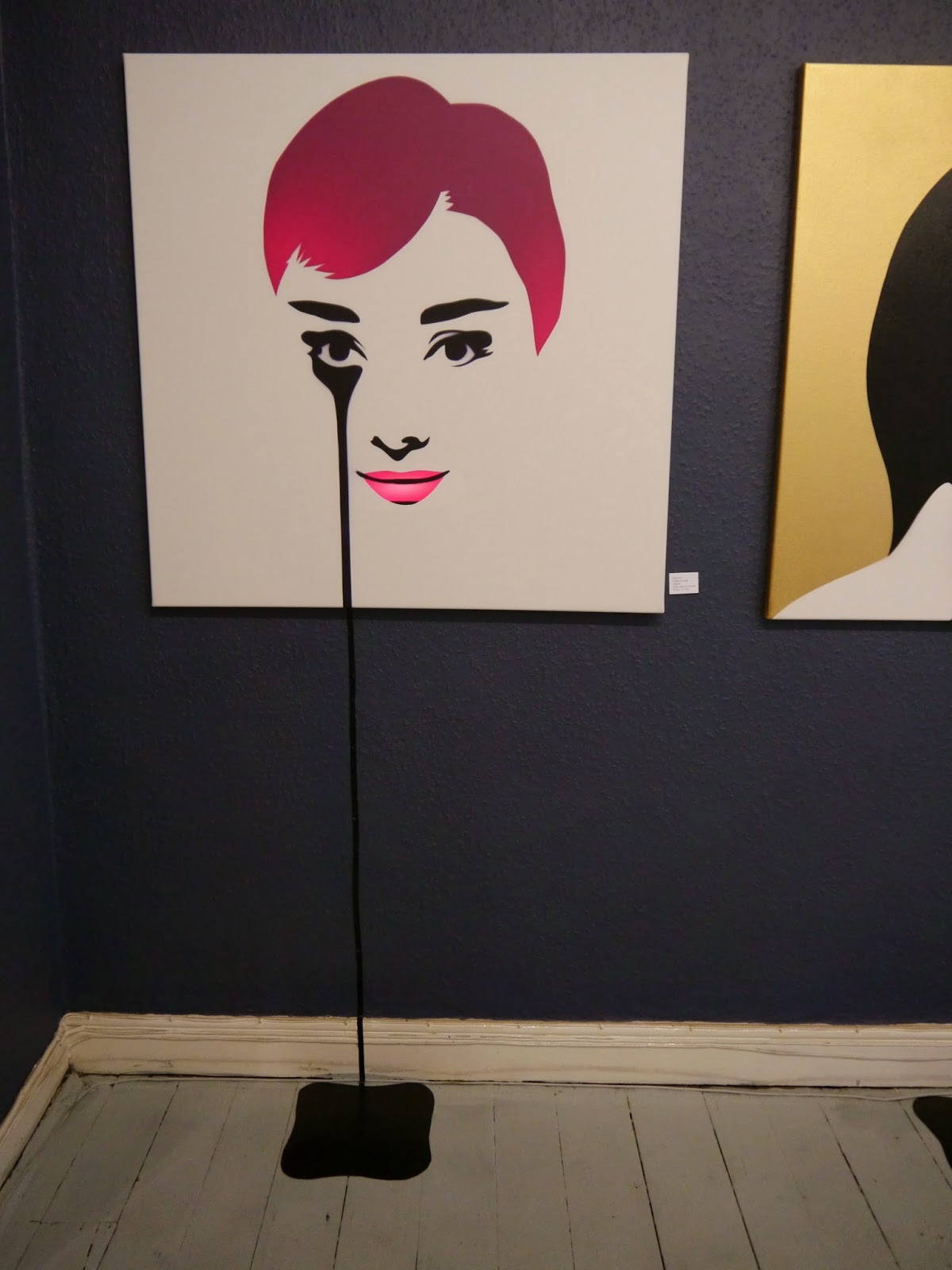
Floating Audrey by Pure Evil
Abraham & Isaac by local artist, Jay Hurst
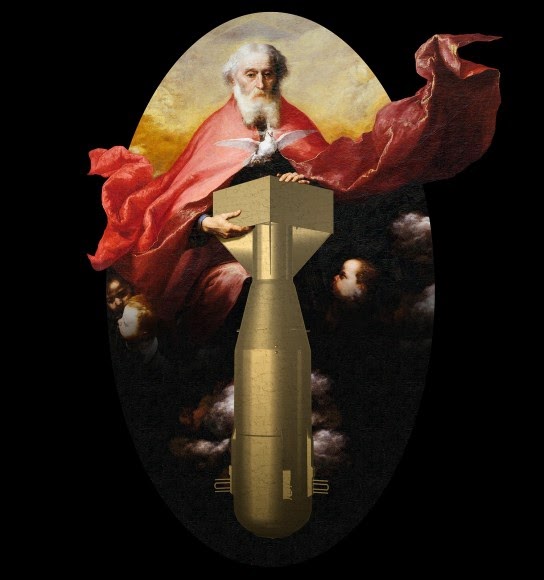
Divine Retributuion by Marcus Gjoen,
former Vivienne Westwood designer


16/11/2014

Ghosts and Grandeur: Exploring the Halls and History of a Liverpool Architectural Gem

The stunning Victorian Gothic Revival masterpiece that is the former Liverpool Seamen's Orphanage stands in stark contrast to the pleasant, sunlit lake at Newsham Park, darkly brooding in silence as the ducks are fed. Built in 1874, it was to house the children of Liverpool's sailors, who often died at sea or were unable to care for the young members of their families.  

My family and I learned last year that my great-great-grandmother spent time in the Orphanage as a little girl and, in a cyclical twist of fate, was to pass away there as an old woman when it later became a psychiatric hospital in the twentieth century. That said, the building holds a special fascination for me, but has been under lock and key since it was left deserted in the early nineties. So, when I learned that its doors were to be opened to the public to showcase student artwork for the first Liverpool Art Festival, I leapt at the chance to explore and photograph it's mysterious interior. 

Supposedly haunted by the ghosts of its former students and mental patients, to wander the corridors of the  Seamen's Orphanage is a chilling experience to say the least. Many of its rooms still contain medical equipment and other unnerving relics of its past, and you would be easily forgiven for thinking you'd somehow walked onto the set of the hit TV show, American Horror Story: Asylum. This place is no work of fiction, however, and the forgotten stories of untold sadness and insanity that must have took place here are all too real. 

While the faded glory of the place is incredibly compelling, such a beautiful building cannot be left to fall into dilapidation for the sake of the occasional photographer looking for an evocative shot or two. It's encouraging to hear, then, that the current owners, a development agency, are considering plans to transform the majestic space so that it can play host to a multitude of cultural events. I hope that such a change will dispel some of the oppressive shadows of its former uses that still linger within, and let us celebrate and preserve this unique piece of Liverpool's architectural heritage. 


27/10/2014

Hangin' On the Telephone: The Anti-Social Reality of Social Tech

Connecting with other people should be easier now than ever, what with us having handheld devices on us most of the time, and access to all sorts of social media imaginable. These things were designed to bring us all together, but the ironic reality is they’ve somehow succeeded in founding a generation of individuals that increasingly spend their time isolated in a bubble of digital distraction, cut off from the world around them and everyone in it.

I recently spotted a young family sat having lunch together – well, when I say “together”, they may as well have been on different continents: The parents (in their late twenties) were sat in silence staring at their phone screens, and their daughter, who was no more than 1 or 2, was sat vacant-eyed and glued to her iPad, just totally switched off from her surroundings.

  Now, I’m not naïve enough to preach that children ought to be kept away from this kind of technology – after all, depriving youngsters of an acquaintance with things like IPads in this day and age will unquestionably disadvantage them in later life – but the time they do spend with it has to be regulated. It is so easy to plonk your little tot in front of a screen for hours on end to keep them quiet, but the more you do so the more you’re risking him or her growing up completely lacking in basic social skills.

Looking around, our modern generation especially seems to have already become worryingly desensitised, with little if any empathy for anyone except ourselves and our own; explore the  furthest end of this spectrum, and you have youngsters that have grown up to be alarmingly hostile towards others and to anything and everything that’s different from them.  Worst of all, we’ve gradually conditioned ourselves to find all this absolutely normal.

Flash forward to a terrifying Orwellian society where mankind has evolved an extra flattened edge to the thumb (ideal for screen swiping) and each of us exists utterly cut off from the other; suspicious, hostile and totally without compassion or consideration. Ok, well maybe the thumb thing is a bit excessive (though you NEVER know), but the rest doesn’t seem quite so far-fetched.

Instead of settling for a vicarious existence through a screen (hey, if you didn’t check in on Facebook, were you ever really there at all..?), why don’t we all set a precedent for the future and make a conscious effort to put down our devices a little more often, go out, and just experience life? Catch up with friends?  Laugh? Try something new? I like my thumbs just the way they are, anyway.


Related Posts Plugin for WordPress, Blogger...